

























In political history, the archetype of the power-entrenched leader one who refuses to relinquish influence even after leaving office has often drawn comparisons to imperial figures who governed with a sense of entitlement rather than service.
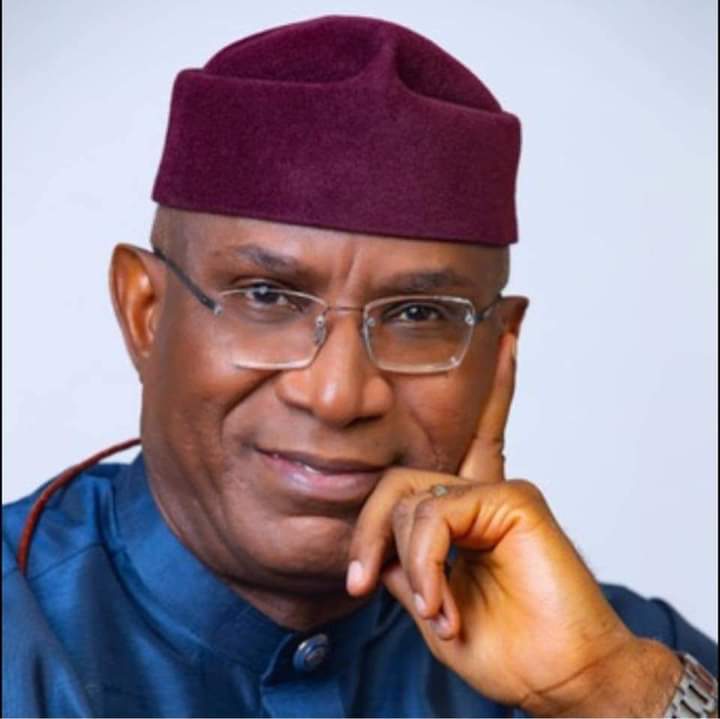
This character, driven by an insatiable desire to remain relevant, frequently prioritizes personal legacy over democratic ideals. It is within this context that the recent political maneuvers of Ifeanyi Okowa must be critically examined.
Since exiting office as Governor of Delta State, Dr. Okowa’s post-administration trajectory appears to reflect a calculated effort to consolidate political control. His orchestration of his daughter’s emergence into the Delta State House of Assembly reportedly at the expense of a more experienced and vibrant legislator from Ika North East has raised fundamental concerns about fairness, meritocracy, and the health of democratic processes.
Her subsequent appointment to chair the influential House Committee on Finance and Appropriation has only intensified perceptions of a carefully constructed political dynasty.
This pattern is not isolated. Observers recall similar political maneuvering that allegedly edged out other contenders, including the daughter of a former governor, from legislative opportunities. Such actions contribute to a growing narrative of exclusion and monopolization of political space and approach inconsistent with the principles of inclusivity and equal opportunity that democracy demands.
Compounding these concerns is the lingering shadow of the reported ₦1.3 trillion anti-graft investigation involving the Economic and Financial Crimes Commission (EFCC). For many, this unresolved matter underscores the need for introspection and accountability, rather than a renewed quest for political dominance. The expectation, particularly for someone of Dr. Okowa’s stature, is to exemplify statesmanship by focusing on legacy-building initiatives that strengthen institutions, not personal power structures.
More troubling, however, is the recent wave of endorsements attributed to a group of self-styled “stakeholders” advocating for his return to the Senate.
This development raises pertinent questions: Who are these stakeholders? Whose interests do they truly represent? And to what extent do their voices reflect the collective will of the Delta North electorate? In a pluralistic society, legitimacy must derive from broad-based consensus not selective endorsements that may lack transparency or inclusivity.
Contrary to these orchestrated narratives, there is mounting evidence of dissent within Dr. Okowa’s own political base. Notably, voices from Ika North have reportedly distanced themselves from this agenda, signaling a shift in grassroots sentiment. Under the aegis of progressive stakeholders, comprising youths, women, professionals, and party loyalists there is a growing call for credible alternatives rooted in competence and widespread acceptability.
Among the names gaining traction is Victor Ochei, a former Speaker of the Delta State House of Assembly. His proponents argue that his legislative experience, administrative acumen, and cross-cutting appeal across the nine local government areas position him as a unifying figure capable of delivering effective representation at the Red Chamber.
Ultimately, the unfolding political narrative in Delta North is a test of democratic resilience. It is a contest between entrenched influence and the people’s right to choose freely. The attempt to impose a singular political will through coercion, manipulation, or orchestrated endorsements risks undermining the very foundations of representative governance.
As 2027 approaches, the people of Delta North must assert their collective voice. The future of the senatorial district should not be shaped by the ambitions of one individual, but by a transparent, participatory process that reflects the aspirations of the many.
The call is clear: a new political direction anchored on equity, renewal, and genuine democratic choice.
Austin Edemodu, PhD is an Abuja based Journalist and Public Affairs Commentator
Copyright © 2020 Totorinews.com All rights reserved. The information contained in Totorinews.com may not be published, broadcast, rewritten, or redistributed without giving due credit to Totorinews.com as the source.


