

























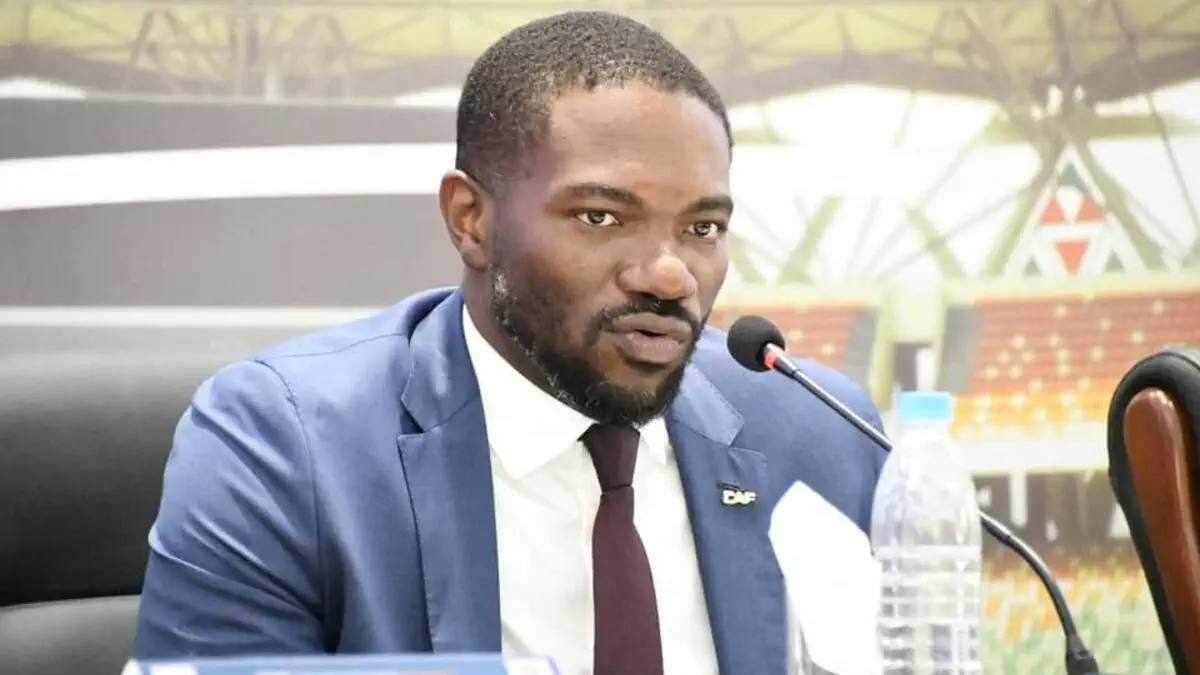
The confirmation of Samson Adamu as the substantive General Secretary of the Confederation of African Football (CAF) is a historic achievement for Nigeria. He becomes the first Nigerian to occupy the position since CAF was established in 1957.
However, beyond the prestige of the appointment, Adamu inherits significant administrative, financial, organisational and governance responsibilities.
Having previously served as CAF Director of Competitions and Director of Tournaments and Events, he is familiar with the organisation’s operations. His new position places him at the centre of its administrative machinery.
Here are some of the major tasks awaiting him.
1. Restoring confidence in CAF’s administration
One of his immediate responsibilities will be strengthening confidence in CAF’s administrative processes.
He will need to promote:
Transparency in decision-making.
Accountability in the management of CAF resources.
Consistency in applying competition regulations.
Clear communication with member associations.
Effective implementation of Executive Committee decisions.
Recent controversies surrounding CAF’s competition decisions make this an important area of responsibility.
2. Improving financial accountability
CAF administers substantial revenues from broadcasting, sponsorship, marketing and competitions.
Adamu will be expected to ensure proper administrative oversight of:
Competition revenues and expenditure.
Financial obligations to member associations.
Payments to participating national teams.
Prize money and tournament-related entitlements.
Financial reporting and internal controls.
He must also ensure that financial commitments are honoured promptly and transparently.
3. Addressing the concerns of 54 member associations
CAF has 54 member associations, each with different football development needs.
Adamu will have to strengthen communication between CAF headquarters and national federations, ensuring that smaller associations are not marginalised.
The effective administration of development grants, technical assistance and infrastructure programmes will be important.
4. Successful organisation of AFCON 2027
This is perhaps one of his biggest immediate assignments.
Kenya, Tanzania and Uganda will jointly host AFCON 2027 from June 19 to July 17.
Adamu must coordinate CAF’s administrative machinery to ensure:
Stadiums and training facilities meet CAF requirements.
Host governments and local organising committees deliver their obligations.
Security, transportation, accommodation and logistics are properly coordinated.
Ticketing, broadcasting and commercial arrangements are completed.
The competition runs according to schedule.
CAF’s September inspection of the three host countries demonstrates the scale of the preparations still required.
5. Resolving the AFCON 2025 controversy
The controversy surrounding the decision to strip Senegal of the AFCON 2025 title and award it to Morocco presents a major institutional challenge.
Senegal appealed the decision to the Court of Arbitration for Sport (CAS).
On October 19, 2026, Reuters reported that CAS expected to deliver its full ruling by the end of November.
Adamu will need to ensure CAF handles the legal and administrative implications professionally, whatever the outcome.
6. Improving refereeing and VAR standards
The credibility of African football depends heavily on confidence in match officials.
Adamu will have to work with CAF’s refereeing and technical departments to strengthen:
Referee training and assessment.
VAR operations and consistency.
Transparency in disciplinary decisions.
Appointment procedures for match officials.
Accountability for officiating errors.
CAF has already announced plans to improve its statutes and regulations to strengthen confidence in referees, VAR operators and its judicial bodies.
7. Strengthening Women’s and Youth Football Development
One of the major responsibilities before Samson Adamu will be strengthening women’s and youth football development across Africa.
Beyond organising continental competitions, CAF needs to develop a sustainable grassroots football development framework that will create opportunities for young boys and girls across its 54 member associations.
A critical step will be for CAF to establish a structured working relationship with the Technical Directors of all 54 member associations. These technical experts understand the football development challenges, available talents and grassroots structures in their respective countries.
Through regular consultations and technical collaboration, CAF can develop a common African football development strategy while allowing individual countries to implement programmes suited to their local environments.
Key priorities should include:
Grassroots development: Establishing sustainable football programmes in schools, communities and local academies.
Technical collaboration: Regular engagement with Technical Directors of all 54 member associations to develop long-term youth football strategies.
Youth competitions: Strengthening U15, U17 and U20 competitions for boys and girls to provide a pathway for emerging talents.
Women’s football: Expanding opportunities for girls through grassroots programmes, youth leagues and improved women’s competitions.
CAF’s consideration of a new U17 Women’s Africa Cup of Nations is one of the developments that will require administrative attention.
Coaching education: Training and certifying more qualified youth and women’s football coaches across the continent.
Talent identification: Establishing effective scouting networks to identify and nurture young talents from underserved communities.
Infrastructure: Supporting the development of grassroots pitches, training centres and youth football facilities.
Monitoring and evaluation: Creating measurable targets to assess the progress of youth and women’s football development in every member association.
The bigger picture
CAF must move beyond organising competitions to building a sustainable football development system.
Adamu should champion a continental technical development framework that brings together CAF’s technical department and the Technical Directors of its 54 member associations.
The objective should be to build a consistent pipeline of talented players, qualified coaches and competitive national teams, while ensuring that girls and boys have equal opportunities to develop their football potential.
Ultimately, Africa’s future football success will depend not only on the competitions it organises but also on the quality of grassroots development taking place across the continent.
8. Strengthening CAF club competitions
The CAF Champions League and Confederation Cup remain important commercial and sporting properties.
Adamu must help ensure better organisation, improved club licensing, efficient match scheduling, reliable officiating, violence free atmosphere and timely financial administration.
CAF’s October 29–30 clubs workshop, focusing on regulations, VAR, commercial obligations and media operations, illustrates some of the work already underway.
9. Improving the welfare of players and national teams
This is particularly important for African football.
CAF must ensure that national teams and participating clubs receive their approved financial entitlements promptly.
Other priorities include:
Improving travel and accommodation arrangements.
Ensuring adequate medical and insurance provisions.
Enforcing competition welfare standards.
Addressing complaints from national federations.
Improving prize-money administration.
10. Strengthening relationships with FIFA and other confederations
As CAF’s chief administrative officer, Adamu will also be involved in coordinating the organisation’s relationships with FIFA, UEFA and other continental football governing bodies.
This includes international football development programmes, administrative cooperation, commercial partnerships and representation of African football interests.
The three defining challenges of his tenure
In my assessment, three issues will particularly define Adamu’s early tenure:
Governance and credibility: Restoring confidence in CAF’s judicial, refereeing and administrative processes.
AFCON 2027: Delivering a successful tournament across three East African countries.
Financial accountability: Ensuring that CAF’s resources and financial commitments benefit African football development and its stakeholders.
An important consideration for Nigeria
Adamu’s appointment is a historic opportunity for Nigeria, but his responsibility is to all 54 CAF member associations.
Nigeria should not expect preferential treatment.
However, the NFF should establish a constructive working relationship with him to advance legitimate Nigerian football interests.
His success should ultimately be measured by the quality of CAF’s administration and the progress of African football, rather than simply the nationality of its General Secretary.
Copyright © 2020 Totorinews.com All rights reserved. The information contained in Totorinews.com may not be published, broadcast, rewritten, or redistributed without giving due credit to Totorinews.com as the source.