




























By Shanaka Anslem Perera
The most important sentence from the Gulf this weekend was not the UAE Defense Ministry announcing it had intercepted 132 of 137 Iranian ballistic missiles and 195 of 209 drones. It was not the confirmation of three dead and 58 injured. It was a single line buried in the UAE Foreign Ministry statement: the UAE voices its firm rejection of the use of the territories of countries in the region as arenas for settling scores or expanding the scope of conflict.
Read that again. That sentence is not addressed to Iran. It is addressed to everyone. It is addressed to the United States.
The grand bargain of the Gulf has operated on a simple formula for decades. Host American military bases. Receive a security umbrella. Prosper under the perception of invulnerability. Build the tallest buildings, the busiest airports, the most expensive hotels, on the understanding that the American presence deters anyone from attacking you. That bargain just failed in real time on the most expensive real estate on earth.
Iran did not fire 137 ballistic missiles at the UAE because it has a dispute with the UAE. It fired them because the UAE hosts Al Dhafra Air Base, where the US Air Force’s 380th Expeditionary Wing operates reconnaissance, refueling, and combat support aircraft. Because the THAAD missile defense system deployed on Emirati soil exists to protect American force projection, not Emirati shopping malls. Because when the United States launched Operation Epic Fury from bases scattered across the Gulf, every host nation became a co-belligerent whether it consented or not.
The proof of concept is sitting right there in the data. Al Jazeera confirmed that the only GCC country Iran did not strike was Oman. Oman has no American bases. Oman served as mediator between Iran and the United States. Oman’s foreign minister said on Friday that peace was within reach. Oman was spared. Every country that hosted US military infrastructure was hit. The correlation is perfect and the lesson is devastating.
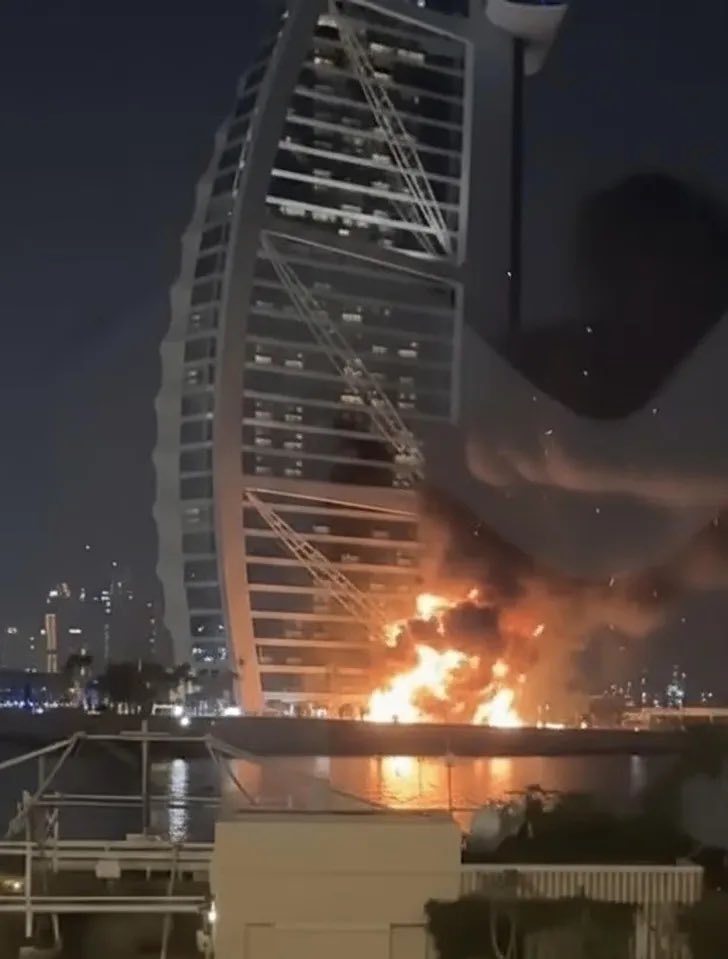
The UAE’s air defense performed extraordinarily. A 96 percent intercept rate against ballistic missiles is among the highest ever recorded in live combat. But the Defense Ministry’s own numbers reveal the problem. Fourteen drones landed within the country. Debris fell across Saadiyat Island, Khalifa City, Bani Yas, and Mohamed bin Zayed City. A Pakistani worker died in Abu Dhabi. Fires broke out at Jebel Ali Port and on the facade of the Burj Al Arab. The world’s busiest international airport shut down. When your economic model depends on absolute safety, 96 percent is not enough.
The UAE Foreign Ministry added that it retains its full and legitimate right to respond. But the response that matters most is not military. It is strategic. The question the UAE is now asking itself, and that every Gulf capital is asking alongside it, is whether the grand bargain still holds. Whether hosting American bases provides net security or net risk. Whether the umbrella protects you or paints a target on you. Iran just demonstrated that the answer depends on which end of the missile you are standing on.
Dubai did not build itself into the crossroads of global commerce by taking sides. It built itself by being the place where all sides could do business. That positioning is now incompatible with hosting the infrastructure of someone else’s war. The UAE knows this. That single sentence about rejecting the use of Gulf territories as arenas for settling scores is not a complaint. It is the beginning of a renegotiation. And if the Gulf states conclude that American bases create more risk than they prevent, the security architecture of the Middle East that has held since 1991 will have to be rebuilt from scratch.
Copyright © 2020 Totorinews.com All rights reserved. The information contained in Totorinews.com may not be published, broadcast, rewritten, or redistributed without giving due credit to Totorinews.com as the source.


